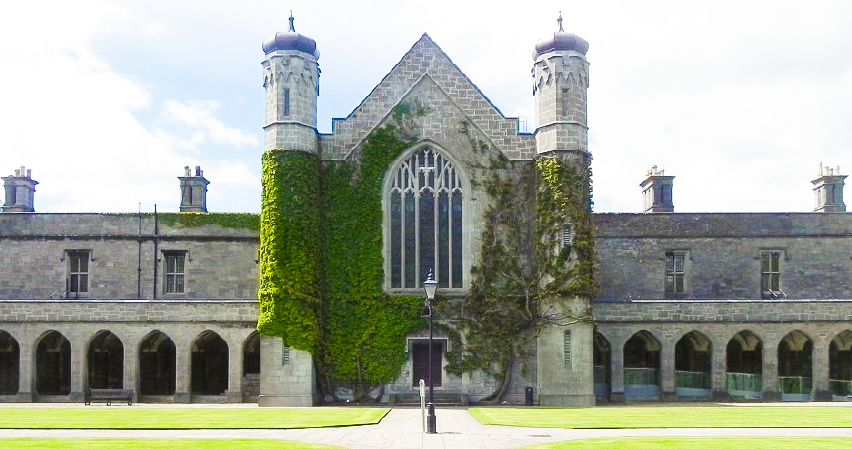
University of Galway is one of Ireland’s leading public research universities, founded in 1845. Located on a 105-hectare campus along the River Corrib, it is home to over 19,000 students, including approximately 3,300 international students from more than 120 countries. The university offers programmes across four colleges and 19 schools.
Ranked among the top 2% of universities worldwide, the University of Galway is renowned for its strengths in medicine and health sciences, biomedical engineering, data science, human rights, marine science, and the humanities. It is also recognised for its leadership in sustainability and strong graduate employability.
Table of Contents
Key Stats at a Glance
| Parameter | Detail |
|---|---|
| Institution | University of Galway (founded 1845; formerly Queen’s College Galway, University College Galway, and NUI Galway) |
| Type | Public research university; constituent university of the National University of Ireland |
| Location | Galway, Ireland – 105-hectare campus on the River Corrib |
| Global Ranking | #284 globally (QS World University Rankings 2026); Top 2% worldwide; The Sunday Times University of the Year 2022 |
| Colleges | Four colleges comprising 19 schools |
| Students | Over 19,000 students, including approximately 3,300 international students from 120+ countries |
| Alumni | 130,000+ worldwide |
| Network | Member of the Coimbra Group of European universities |
| Strengths | Medical technology, biomedical engineering, data science, medicine and nursing, human rights, and marine science |
| Medium of Instruction | English |
Programs Offered (UG & PG)
Undergraduate (UG) Programmes
| Faculty | Undergraduate (UG) Programmes |
|---|---|
| Arts, Social Sciences & Celtic Studies | BA (Arts), Psychology, Journalism, English, History |
| Business, Public Policy & Law | BComm (Commerce), Bachelor of Corporate Law, Business Information Systems |
| Medicine, Nursing & Health Sciences | Medicine (MB BCh BAO), Nursing, Midwifery |
| Science & Engineering | Computer Science, Biomedical Engineering, Electronic & Computer Engineering, Data Science, Marine Science |
*University of Galway offers 50+ undergraduate programmes. Please refer to the programme page for the complete and most up-to-date list of courses.
Postgraduate (PG) Programmes
| Faculty | Postgraduate (PG) Programmes |
|---|---|
| Arts, Social Sciences & Celtic Studies | MA in Digital Humanities, MA in Journalism, MA in International & Comparative Business, MA in Public Policy |
| Business, Public Policy & Law | MSc International Management, MSc Digital Marketing, MSc Finance, LLM, MSc Human Resource Management |
| Medicine, Nursing & Health Sciences | MSc Biomedical Science, MSc Clinical Neuroscience, Master of Public Health (MPH), MSc Health Economics |
| Science & Engineering | MSc Artificial Intelligence, MSc Data Analytics, MSc Cybersecurity, MSc Biomedical Engineering, MSc Software Design & Development |
*University of Galway offers 200+ postgraduate. Please refer to the programme page for the complete and most up-to-date list of courses.

Tuition Fees
| Study Level | Annual Tuition Fees (Approx.) |
|---|---|
| Undergraduate (UG) | €19,000–€29,000 per year |
| Postgraduate Taught (PG) | €18,000–€30,000 per year |
| Postgraduate Research | €17,000–€24,000 per year |
Notes: Fees vary by programme, with Medicine and certain Health Sciences programmes generally having higher tuition fees than Arts, Business, or Science programmes.
Tuition fees are reviewed annually and may change.
Admission Process & Timelines
| Stage | Details |
|---|---|
| 1. Choose a Programme | Explore undergraduate or postgraduate programmes and review the entry requirements on the university website. |
| 2. Submit Application | UG: Apply through the CAO (EU applicants) or directly via the University of Galway for most international applicants. PG: Apply online through the University’s application portal. |
| 3. Upload Supporting Documents | Submit academic transcripts, English language proficiency test scores (IELTS/TOEFL/PTE, if required), passport copy, CV, Statement of Purpose (PG), and letters of recommendation where applicable. |
| 4. Receive Offer | Successful applicants receive either a conditional or an unconditional offer. Most applications are reviewed on a rolling basis. |
| 5. Accept Offer & Pay Deposit | Accept your offer and pay the tuition deposit (if applicable) by the deadline mentioned in the offer letter. |
| 6. Apply for a Student Visa | International students requiring a visa should apply after receiving their offer and paying the required deposit. |
| 7. Arrange Accommodation & Travel | Secure accommodation, health insurance, and complete pre-arrival formalities before travelling to Ireland. |
| 8. Registration & Orientation | Complete university registration, attend orientation, and begin classes in September (or January for selected programmes). |
Application Timelines
| Intake | Application Period | Recommendation |
|---|---|---|
| September (Main Intake) | Applications typically open in October/November of the previous year. Most postgraduate programmes operate on a rolling admissions basis until full. | Apply 6–9 months before your intended start date, especially if you require a student visa. |
| January Intake | Available for selected postgraduate and research programmes only. | Apply at least 4–6 months in advance. |
Note: Many postgraduate programmes do not have a fixed application deadline and close once all seats are filled. International applicants are therefore encouraged to apply as early as possible.
Admission Checklist
- Completed online application
- Academic transcripts and certificates
- Valid passport copy
- English language proficiency (IELTS/TOEFL/PTE/Duolingo, if required)
- Statement of Purpose (SOP)
- Letters of Recommendation (LORs)
- CV/Resume
- Portfolio (for creative programmes, if applicable)
- Accept offer and pay tuition deposit (if applicable)
- Apply for an Irish student visa (non-EU/EEA students)
Note: Admission requirements vary by programme. Competitive courses such as Medicine, Nursing, and certain postgraduate programmes may require additional documents, interviews, or specific subject prerequisites. Applicants should always check the requirements for their chosen programme before applying.
Curious about other top universities in Ireland? Explore our complete Study in Ireland guide to compare options.
Scholarships & Funding
University of Galway has a generous package of Scholarships and Funding Opportunities.
We appreciate that funding your education can be a challenge, and to support your education, we have a range of scholarships and funding opportunities.
Right now, planning for the future is challenging. But with challenge comes great opportunity. University of Galway is an award-winning university in the heart of Galway city. Ranked among the top 2% of universities in the world, our courses include business, law, medicine, arts, science, engineering and more, all built on a thriving campus centred around a strong campus community.
This year, we mark 175 years of learning, so we’ve weathered storms in the past. Which means we know a thing or two about opportunity.
| Scholarship | Eligibility | Award/Benefit |
|---|---|---|
| Global Excellence Scholarship | High-achieving non-EU undergraduate and postgraduate students | Merit-based tuition fee scholarship (award value varies by programme). |
| Global Merit Scholarship | Eligible international (non-EU) students | Partial tuition fee waiver based on academic merit. |
| Government of Ireland International Education Scholarship (GOI-IES) | Outstanding non-EU postgraduate students | €10,000 stipend plus a full tuition fee waiver for one year of full-time study. |
| Hardiman PhD Scholarships | Exceptional doctoral (PhD) applicants | Funding package including stipend and tuition fee support for eligible research students. |
| External Scholarships | Eligible international students | Students may also apply for funding through Education in Ireland, the China Scholarship Council (CSC), and other government or external scholarship schemes. |
Fundings
1. Most University of Galway scholarships are merit-based, with applications assessed on academic excellence.
2. Scholarship availability, eligibility criteria, and award values vary by programme and intake.
3. International applicants are encouraged to apply early, as some scholarships have limited awards and separate application deadlines.
Admission / Entry Requirements (GPA, English Language Requirements, Standardized Tests, etc.)
The University of Galway welcomes academically qualified students from around the world. Admission requirements vary by programme and level of study; however, international applicants are generally expected to demonstrate strong academic performance, meet the University’s English language proficiency requirements, and satisfy any programme-specific prerequisites or additional selection criteria, where applicable.
Undergraduate (UG) Requirements
1. Academic Requirements
- Successful completion of a recognized secondary/high school qualification equivalent to the Irish Leaving Certificate.
- Applicants must meet the minimum entry requirements and any programme-specific subject prerequisites.
- Country-specific academic requirements apply for international applicants and vary based on the applicant’s education system.
2. English Language Requirements
Applicants whose first language is not English must demonstrate English language proficiency through an accepted test. Typical minimum requirements include:
- IELTS Academic: Overall score of 6.5, with no band below 6.0 (higher scores may be required for certain programmes).
- TOEFL iBT: Accepted for most programmes (minimum score varies by course).
- Pearson PTE Academic: Accepted for most programmes (minimum score varies by course).
- Other recognised English language qualifications accepted by the University of Galway.
3. Additional Requirements
- Some programmes may require specific subjects, portfolios, auditions, interviews, or aptitude tests.
- Official academic transcripts and examination certificates (or predicted grades, where applicable) must be submitted.
- Certain competitive programmes may have higher entry requirements or additional selection criteria.
- International applicants must also meet visa and financial requirements, where applicable.
Postgraduate (PG) Requirements
1. Academic Requirements
- A recognised bachelor’s degree (or equivalent) from an accredited institution in a relevant discipline.
- Most taught master’s programmes require a minimum Second Class Honours, Grade 1 (2:1) or equivalent, although some programmes may accept a Second Class Honours, Grade 2 (2:2) or specify different entry criteria.
- Applicants must meet any programme-specific academic prerequisites or professional requirements.
2. English Language Requirements
Applicants whose first language is not English must provide proof of English language proficiency through an accepted test. Typical minimum requirements include:
- IELTS Academic: Overall score of 6.5, with no band below 6.0 (higher scores may be required for certain programmes).
- TOEFL iBT: Accepted for most programmes (minimum score varies by course).
- Pearson PTE Academic: Accepted for most programmes (minimum score varies by course).
- Other recognised English language qualifications accepted by the University of Galway.
3. Additional Requirements
- Official academic transcripts and degree certificates.
- Statement of Purpose (SOP) or personal statement, if required by the programme.
- Curriculum Vitae (CV)/Résumé for programmes that require professional experience.
- Letters of Recommendation (LORs), where applicable.
- Some programmes may require a portfolio, research proposal, interview, or relevant work experience.
- International applicants must also meet Irish student visa and financial requirements, where applicable.
While meeting the minimum requirements is important, successful applicants often present a strong academic record, a compelling SOP, relevant extracurricular achievements, and a clear vision for their future studies and career goals. Applying early can also improve your chances of receiving scholarships and securing accommodation.

Campus Life
What is the University of Galway Most Famous for in Student Life?
The University of Galway Experience is defined by its welcoming community, scenic riverside campus, and vibrant student culture. Located in the heart of Galway—often regarded as Ireland’s cultural capital—the university offers students an ideal blend of academic excellence, outdoor living, cultural experiences, and a close-knit campus environment. Its compact campus and city-centre location make it easy for students to enjoy everything Galway has to offer.
Why Do Students Love Campus Life at University of Galway?
- Riverside Campus in the Heart of Galway: Study on a beautiful campus overlooking the River Corrib, just a short walk from Galway’s bustling city centre, cafés, restaurants, shops, and famous cultural attractions.
- 110+ Student Societies & 45+ Sports Clubs: From debating, entrepreneurship, music, drama, volunteering, and cultural societies to rugby, rowing, Gaelic games, basketball, and more, students have countless opportunities to pursue their interests, develop leadership skills, and build lifelong friendships.
- Diverse International Community: With students representing over 120 countries, the University of Galway provides a welcoming and inclusive environment where students experience different cultures and build global networks.
- A City Famous for Festivals & Student Life: Galway is renowned for its lively atmosphere, hosting internationally acclaimed events such as the Galway International Arts Festival, Galway International Oyster & Seafood Festival, and numerous music, film, and cultural celebrations throughout the year.
- Excellent Career & Industry Connections: Students benefit from internships, employer networking events, career fairs, entrepreneurship programmes, and strong industry links with leading employers across Ireland and internationally.
- Outdoor Lifestyle & Wellbeing: Whether it’s walking along the River Corrib, exploring the Wild Atlantic Way, visiting nearby beaches and Connemara, or participating in campus wellbeing activities, Galway offers an exceptional balance between academic life and outdoor recreation.
- Supportive and Friendly Student Community: The University of Galway is widely recognised for its approachable faculty, active Students’ Union, comprehensive student support services, and welcoming atmosphere, helping students quickly feel part of the university community.
Placements & Career Outcomes
Strong Graduate Employability
The University of Galway is committed to preparing students for successful careers through industry-focused education, experiential learning, and comprehensive career support. Graduates are highly sought after by employers in Ireland and around the world.
Why University of Galway Graduates Stand Out?
- Dedicated Career Development Centre: Students have access to one-to-one career guidance, CV and cover letter reviews, mock interviews, career planning workshops, and job search support throughout their studies.
- Industry Connections & Employer Engagement: The university collaborates with leading multinational companies, public sector organisations, research institutes, and start-ups. Students regularly participate in employer presentations, networking events, recruitment fairs, and industry talks.
- Internships and Work Placements: Many undergraduate and postgraduate programmes include internships, clinical placements, professional practice, or work-integrated learning opportunities, allowing students to gain valuable industry experience before graduation.
- Graduate Opportunities in Ireland and Beyond: Graduates pursue careers across sectors such as technology, healthcare, engineering, business, finance, life sciences, education, media, and public policy. Many also continue to doctoral research or professional qualifications.
- Leading Graduate Employers: University of Galway graduates are employed by organisations such as Accenture, Deloitte, EY, PwC, KPMG, Medtronic, Boston Scientific, SAP, Intel, Microsoft, IBM, HPE, Cisco, and the Health Service Executive (HSE), among many others.
- Entrepreneurship & Innovation Support: Students interested in launching their own ventures can access innovation programmes, mentoring, incubation support, and entrepreneurship initiatives through the university’s innovation ecosystem.
- Global Alumni Network: Graduates become part of an extensive international alumni network, providing valuable professional connections, mentoring opportunities, and career support across industries and countries.

FAQs
Yes. The University of Galway is one of Ireland's leading public research universities, known for its high-quality teaching, research excellence, strong industry links, and welcoming international student community.
Yes. The university welcomes students from India and many other countries, offering undergraduate, postgraduate, and research programmes across a wide range of disciplines.
Most programmes require an IELTS Academic score of 6.5 overall with no band below 6.0, or an equivalent score in another accepted English language test. Some programmes may have higher requirements.
Yes. The university offers a range of merit-based scholarships for international students. Eligibility, award value, and application requirements vary by programme and level of study.
Yes. Many undergraduate and postgraduate programmes include internships, clinical placements, professional practice, or work-integrated learning opportunities, depending on the course.
Yes. International students holding a valid Irish Stamp 2 permission can generally work up to 20 hours per week during the academic term and up to 40 hours per week during designated holiday periods, subject to Irish immigration regulations.
Yes. The university offers purpose-built student accommodation and provides guidance to help students find suitable private accommodation in Galway.
Some of the university's most popular programmes are in:
- Business and Management
- Computer Science and Data Analytics
- Engineering
- Medicine and Health Sciences
- Nursing
- Law
- Arts and Humanities
- Life Sciences
- Psychology
Yes. Galway is considered one of Ireland's most student-friendly cities, offering a safe, welcoming environment, vibrant cultural scene, excellent quality of life, and convenient access to nature and outdoor activities.
Yes. Eligible international graduates may apply for Ireland's Third Level Graduate Programme, which allows graduates to remain in Ireland to seek employment. Eligible bachelor's degree graduates can typically stay for up to one year, while eligible master's and doctoral graduates can typically stay for up to two years, subject to the latest Irish immigration regulations.
Ireland Universities
- Trinity College Dublin (TCD)
- University College Dublin (UCD)
- University of Galway
- University College Cork (UCC)
- National College of Ireland (NCI)
- Dublin City University (DCU)
- University of Limerick (UL)
- Technological University of the Shannon
- Dublin Business School (DBS)
- Griffith College Dublin
- Technological University Dublin
- Munster Technological University (MTU)
- Atlantic Technological University (ATU)
- Dundalk Institute of Technology (DkIT)
- National College of Art and Design
- Institute of Art, Design & Technology
- Mary Immaculate College (MIC)
- Maynooth University
- Royal College of Surgeons (RCSI)
- South East Technological University
- Shannon College of Hotel Management
- Independent College Dublin
- ICD Business School
- Dorset College Dublin
- CCT College Dublin
- American College Dublin
Ireland Universities





-
National College of IrelandApp Fee Waiver
-
Dublin City UniversityApp Fee Waiver
-
Dublin Business SchoolApp Fee Waiver
-
University College DublinApp Fee Waiver*€70 for 4 programs still applicable.
-
Dundalk Institute of TechnologyApp Fee Waiver
-
South East Technological University, CarlowApp Fee Waiver
-
Griffith College – Dublin, Cork & LimerickApp Fee Waiver
-
Munster Technological University (CIT)App Fee Waiver
-
Technological University Shannon (Athlone & Limerick)App Fee Waiver