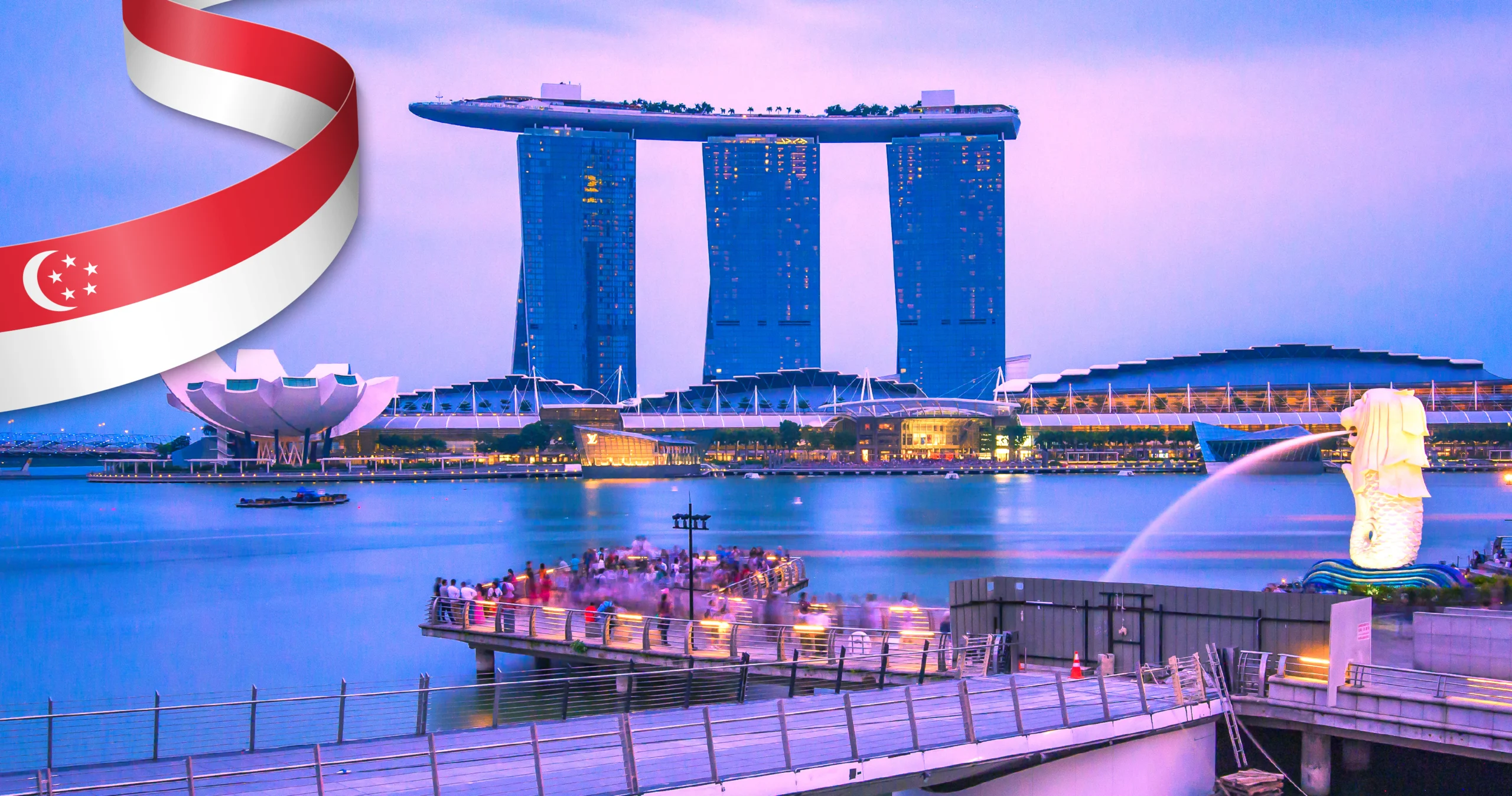
The city‑state of Singapore, known as Lion City or Garden City, has emerged as a popular overseas study destination in recent years. Education is given very high importance, and Singapore is widely known as a “global schoolhouse.” National University of Singapore (NUS) and Nanyang Technological University (NTU) are two globally recognised institutions. Academic excellence, relatively affordable education compared to other top destinations, safety, student satisfaction, and strong post‑study work opportunities attract students from around the world.
1. Study in QS-Ranked Universities
Singapore is home to some of the finest universities with globally recognised degrees. Each university offers a wide range of programs tailored to international students’ academic interests and career goals. According to the QS World University Rankings 2025, several Singapore universities feature prominently:
| Universities | QS World University Rankings 2025 |
|---|---|
| National University of Singapore (NUS) | Ranked 8 |
| Nanyang Technological University (NTU) | Ranked 15 |
| Singapore University of Technology and Design (SUTD) | Ranked 429 (band) |
| Singapore Management University (SMU) | Ranked 545 (band) |
2. Work With Top Global Brands
After graduating from leading Singapore universities, students can work with globally recognised brands headquartered or regionally based in Singapore. These include major technology, finance, logistics, and consumer companies that actively recruit international talent. Working with such organisations helps students develop in‑demand skills, industry exposure, and strong professional networks.
Examples of top brands in Singapore include:
3. Diverse Country
Singapore is a prime example of a multicultural society. The country has four official languages – English, Chinese, Malay, and Tamil – and a vibrant mix of cultures and religions. This diversity offers international students a rich, inclusive environment and extensive cross‑cultural exposure.
4. No Major Language Barriers
Because English is widely spoken and used in education, international students can adapt quickly. At the same time, exposure to Malay, Tamil, and Chinese gives students the opportunity to pick up additional languages, which can be an advantage in global careers.
5. Ideal Destination for Business Studies
Singapore’s status as a global business and financial hub makes it an ideal location for business and management studies. The country’s pro-business policies, strong corporate presence, and consistent economic growth provide excellent internship and job opportunities.
Leading business schools in Singapore provide rigorous training, case-based learning, and real-world projects to prepare students for roles in consulting, finance, marketing, entrepreneurship, and more.
Key institutions for business studies include:
International students who have completed high school or undergraduate education in their home countries are eligible to pursue higher education in Singapore. They can apply to the following types of programs:

Singapore’s higher education landscape includes a mix of public universities, private universities, polytechnics, Institutes of Technical Education (ITE), and specialised schools.
4‑Point Grade System (Example: SMU)
Singapore Management University (SMU) uses a 4‑point GPA system (with some courses using a 4.3‑point cap for A+). In general, letter grades from A+ to F map to GPA points between 4.3 and 0.
You can summarise this as:
5‑Point Grade System (NUS, NTU, SIT, SUTD)
NUS, NTU, SIT, and SUTD broadly follow a 5‑point GPA or Cumulative Average Point (CAP) system, where:
Precise mappings and policies (such as S/U options) may differ slightly by institution and are updated periodically in the university’s official regulations.
Singapore’s universities and colleges emphasise technology‑enabled, interactive learning and practical skills. Teaching methods often include peer learning, real‑world projects, and problem‑based learning rather than traditional lecture‑only formats.
Key benefits of studying in Singapore include:
1. Business
2. Technology
3. Engineering
4. Architecture
5. Hospitality and Tourism
Other popular study areas include:
| Area | Area |
|---|---|
| Banking and Finance | Computer Science and Information Technology |
| Law | Design and Creative Arts |
| Hotel Management | Cybersecurity |
| Entrepreneurship | Digital Media |
| Data Analytics |
The following universities are particularly popular among international students due to their strong rankings and reputation:
| Universities | Notes on Ranking (QS 2025/2026) |
|---|---|
| National University of Singapore (NUS) – Public University | Consistently ranked in the global top 10 (QS) |
| Nanyang Technological University (NTU) – Public University | Consistently ranked in the global top 20 (QS) |
| Singapore University of Technology and Design (SUTD) – Public University | Ranked in the 400s (QS band) |
| Singapore Management University (SMU) – Public University | Ranked in the 500s (QS band) |
Singapore hosts several highly regarded business schools that feature in global rankings for MBA, Masters in Management, and Executive Education.
| Name of School | QS Ranking (Business/Management) | Notable Rankings (MiM / MBA / EMBA) |
|---|---|---|
| INSEAD (Singapore campus) | Among top 5 globally | Top-tier in MiM and EMBA worldwide |
| NUS Business School | Highly ranked in Asia | Strong MBA and EMBA rankings |
| Singapore Management University (SMU) | Well-ranked in Asia | Recognised for MSc and MBA programs |
Singapore provides world‑class higher education in English, making it an attractive destination for international students. To study in Singapore, you must usually demonstrate English proficiency through tests such as IELTS, TOEFL, or PTE. Many institutions also accept alternative tests like the Malaysian University English Test (MUET).
Indian students who have completed 12 years of schooling in English medium may be exempt from submitting separate English test scores at some universities, subject to each institution’s policy.
The following universities accept alternative English proficiency tests such as PTE and/or MUET:
| University | Alternate Exam Scores Accepted (examples) |
|---|---|
| Nanyang Technological University (NTU) | Pearson Test of English (PTE), MUET |
| National University of Singapore (NUS) | Pearson Test of English (PTE), MUET |
| PSB Academy | Pearson Test of English (PTE), MUET |
| INSEAD | Pearson Test of English (PTE), MUET |
| Dimensions International College | Pearson Test of English (PTE), MUET |
| East Asia Institute of Management | Pearson Test of English (PTE), MUET |
| Leadership and Management Institute | Pearson Test of English (PTE), MUET |
| Curtin University (Singapore) | Pearson Test of English (PTE), MUET |
| Heartpower TESOL & Teacher Training Centre | Pearson Test of English (PTE), MUET |
| London School of Business and Finance, Singapore | Pearson Test of English (PTE), MUET |
Always check the latest English language requirements on the official university website, as accepted tests and score thresholds may change.
Although Singapore can be more affordable than many European and North American destinations, the cost of study is still substantial. For international students, average tuition fees can range from about SGD 20,000 to 40,000 per year for undergraduate programs at public universities, and higher for private universities, depending on the course.
Private universities often charge higher fees, and MBA or other specialised programs can cost SGD 46,000–100,000 or more in total. Public universities offer government‑subsidised tuition for Singaporeans and, in some cases, for international students under the Tuition Grant or Service Obligation schemes.
Cost‑effective public universities in Singapore include:
| University Name | Type of University |
|---|---|
| National University of Singapore (NUS) | Public University |
| Nanyang Technological University (NTU) | Public University |
| Singapore Management University (SMU) | Public University |
| Singapore University of Technology and Design (SUTD) | Public University |
| Singapore University of Social Sciences (SUSS) | Public University |
| Singapore Institute of Technology (SIT) | Public University |
The application process for undergraduate and graduate programs in Singapore is straightforward but deadline‑driven.
Eligibility criteria vary by institution and program, but some general guidelines are:
Commonly required documents:
Most universities in Singapore offer two main intakes: a larger Fall/August intake and a smaller Spring/January intake. Students should ideally start preparation at least 9–12 months in advance.
Fall Intake (August / September)
Typical timeline:
Spring Intake (January / February)
Typical timeline:
Exact intake availability and deadlines vary by university and program, so always refer to official websites.

Below is an approximate annual cost breakdown for international students in Singapore. Actual figures vary by city, lifestyle, and program.
| Types of Expenses (Annual) | Approximate Expenses in SGD (per year) |
|---|---|
| Tuition Fees – Public Universities | ~20,000–40,000 for undergraduate programs; up to ~50,000 for some postgraduate programs |
| Tuition Fees – Private Universities | ~25,000–50,000 or more, depending on course and institution; MBA and specialised programs can reach 46,000–100,000+ total |
| Living Expenses (including accommodation) | Typically 18,000–30,000 per year for most students; higher if renting a private apartment centrally |
On‑campus or shared student accommodation is usually more affordable than renting a private one‑bedroom apartment. Students should always check university websites for the latest fee structures and budget accordingly.
International students generally require a Student’s Pass to study full‑time in Singapore at approved institutions (Institutes of Higher Learning – IHLs).
Always check if your institution is registered with the Immigration & Checkpoints Authority (ICA) and eligible for Student’s Pass applications.
You should apply for your Student’s Pass at least 1–2 months before your course starts. The process usually involves the SOLAR (Student’s Pass Online Application & Registration) system.
Processes and system names can change, so always refer to the latest guidance on the official ICA website.
You may be required to present or upload the following documents for your Student’s Pass application and at entry:
Most universities assess international applicants based on academic performance and scores in standardised and English language tests.
English Language Proficiency Tests
Standardised Tests
Always verify test requirements and score expectations for each program on the official university website.
Several scholarships are available to Indian and other international students, funded either by the Singapore government, universities, or external organisations. Many are merit‑based and can significantly reduce study costs.
| Name of Scholarship | Description | Eligibility (Summary) | Typical Benefits (SGD) |
|---|---|---|---|
| Singapore International Graduate Award (SINGA) | Jointly offered by ASTAR, NTU, NUS, and SUTD for PhD in science & engineering | Strong academic record and research potential in biomedical, engineering, or physical sciences | Monthly stipend ~2,000–2,500 + airfare and settling-in allowance |
| ADB–Japan Scholarship for Developing Countries | For graduate studies in fields like business, economics, technology, and management | Citizens of ADB borrowing countries with a bachelor’s degree, usually ≤35 years | Tuition, monthly allowance, travel, and medical insurance |
| Commonwealth Scholarship (various schemes) | Master’s/PhD scholarships for students from Commonwealth countries | Citizens of Commonwealth countries with strong academic records, under specified age limit | Tuition, travel, and living allowances |
| Lee Kong Chian Graduate Scholarships | For PhD students at the National University of Singapore | Strong academic record and admission to eligible NUS PhD program | Monthly stipend, tuition/exam fees, and allowances |
| Singapore Millennium Foundation Scholarships | For predoctoral and postdoctoral research in selected fields | Graduates pursuing research at an approved IHL in Singapore | Monthly stipend and sometimes travel support |
Details, amounts, and eligibility can change; always check the latest scholarship pages before applying.
After completing their studies, international students can explore several work pass options depending on their job offer and salary level.
Service Obligation (SO) Scheme
Some subsidised graduate programs require international students to work for a Singapore‑based company for up to three years after graduation under a Service Obligation or Tuition Grant bond. Eligible employers include local and foreign companies registered with the Accounting & Corporate Regulatory Authority (ACRA).
In Singapore, full‑time international students at approved institutions may be allowed to work part‑time (for example, up to 16 hours per week during term) and full‑time during vacations, subject to MOM/ICA regulations and institutional policies. Always confirm the latest rules with your university.
| On-Campus Jobs | Off-Campus Jobs |
|---|---|
| Student Admissions Counsellor | Data Entry Operator |
| Instructional Assistant | Language Interpreter |
| Admissions Assistant | Freelance work (where permitted) |
| Student Services Executive | Hospitality roles |
| Administrative Executive | Tutoring |
| Teaching Assistant | Delivery services |
| Social Media Assistant | Retail and Sales |
Graduates from Singaporean institutions can pursue careers in finance, technology, engineering, consulting, and many other sectors. Indicative salary ranges (in SGD per year) are:
| Job Role | Approx. Average Annual Salary (SGD) |
|---|---|
| Accountant | 39,900 – 72,000 |
| Data Analyst | 40,000 – 100,000+ |
| AI Specialist | 58,000 upwards |
| Robotics Engineer | 45,000 – 85,000 |
| Cybersecurity Specialist | 40,000 – 80,000 |
| E-Commerce Specialist | 34,000 – 130,000 |
| UX/UI Professional | 45,000 – 90,000 |

Yes, you can continue in Singapore, but you will require a short-term Student Pass. This allows you to stay in the country for 90 days. You can apply for this pass through the Immigration and Checkpoints Authority website.
Yes, you can work on Student Pass for 16 hours per week when the academic semester is in progress. However, you can work for unlimited hours during the summer, provided you are enrolled as a full-time student at one of the IHL.
No, you cannot work using Student Pass after the course completion. This pass is usually issued for the duration of your program or the type of program you are applying to. You must have a Work Pass to work in Singapore. This also protects you from exploitation.
The pay would entirely depend on your type and nature of job. However, depending on the job, students earn anywhere between $1000 to $2000 every month depending on the job. According to Glassdoor, an average salary earned by students in Singapore by working part time is SGD 1800.
Yes, you need both. You can check the website of the Immigration & Checkpoints Authority (ICA) of Singapore to learn more about the type of health insurance required. You will be required to undergo medical tests like BMI test, urine test, blood test, complete blood count, blood sugar, and so on.
You may have several questions regarding pursuing your studies in Singapore. You can approach our experts at Collegepond for answers. You can write to us at info@collegepond.com or call us at 022-26103135 to book an appointment with our expert.