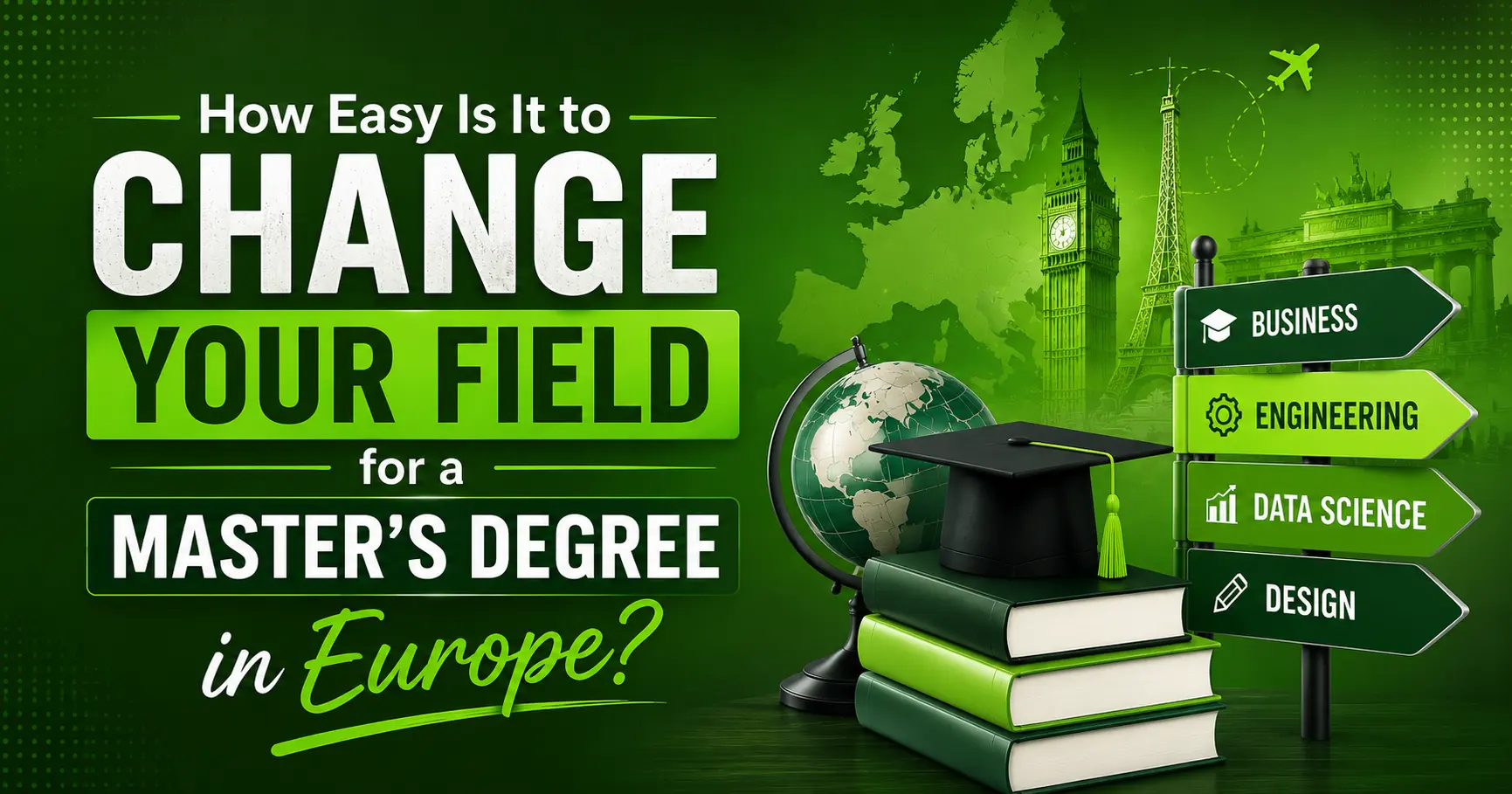
Many students dream of studying in Europe, but one common question is:
“Can I change my field of study for my Master’s degree?”
The good news is – yes, in many European countries it is possible, but the flexibility depends on the country, university, and course you choose.
Can You Change Your Academic Field in Europe?
European universities generally fall into two categories:
- Strictly specialized programs – These require a strong background in the same subject.
- Flexible or conversion programs – These allow students to switch fields.
For example:
- An Engineering student may move into Management or Data Analytics.
- A Commerce student may shift to Marketing or International Business.
- A Computer Science student may enter AI, Cybersecurity, or Business Analytics.
However, changing from completely unrelated fields – like History to Medicine – is usually difficult.
Germany
Germany is extremely strict about academic backgrounds.
- Public universities usually prefer related Bachelor’s degrees.
- Technical programs often require subject-specific credits.
- Switching to Business or Management courses is easier than switching to Technical Courses like Engineering, Pharmacy, etc.
Easier Transitions:
- Engineering → Management
- IT → Data Science
- Commerce → Business Analytics
Difficult Transitions:
- Arts → Engineering
- Commerce → IT / Analytics
France
France offers many flexible Master’s programs, especially in business schools.
Students can often move into:
- International Business
- Luxury Brand Management
- Marketing
- Hospitality Management
French private universities are usually more open to profile changes than public universities.
Ireland
Ireland is one of the best options for students wanting to change fields.
Many universities offer:
- Conversion courses
- Bridge programs
- Industry-oriented Master’s degrees
Popular field changes include:
- Mechanical Engineering → Data Analytics
- Commerce → Business Analytics
- Arts → Digital Marketing
United Kingdom (UK)
The UK is one of the most flexible destinations for students who want to change their academic field for a Master’s degree.
Many universities offer:
- Conversion Master’s Programs: These programs are specifically designed for students who want to switch to a new field. They include foundational knowledge along with advanced coursework, making them ideal for career changers.
- Pre-Master’s Pathways: Pre-Master’s programs help students meet the academic requirements for a Master’s degree by providing subject-specific preparation and study skills before the main course begins.
- Bridge Courses: Bridge courses are short preparatory programs that help students fill knowledge gaps in key subjects required for their chosen Master’s degree.
- Foundation Modules: Some universities require students from different academic backgrounds to complete additional modules before or during the Master’s program to build the necessary subject knowledge.
These programs are specifically designed for students who do not have a directly related academic background but want to enter a new field.
For highly specialized fields, universities may require students to complete a Pre-Master’s program before progressing to the main Master’s degree. These pathway programs help students build subject knowledge, academic skills, and confidence before starting their postgraduate studies.
The UK is particularly known for its strong range of conversion courses in:
- Business and Management
- Data Analytics
- Computer Science
- Digital Marketing
- Psychology
- Law
This makes the UK an excellent option for students looking to transition into a new career path while earning a globally recognized qualification.
Netherlands
Netherlands provides several interdisciplinary programs.
If changing your field completely, some universities may ask students to complete the following before the course starts:
- Pre-master courses
- Foundation modules
- Additional credits
Field changes are possible, especially in:
- Sustainability
- Business
- Technology Management
- Media Studies
Sweden
Sweden is known for flexible and innovative education systems.
However, field change is a bit difficult here. Students can often apply for interdisciplinary programs combining:
- Technology + Business
- Design + Innovation
- Environment + Management
Universities focus strongly on:
- Skills
- Motivation
- Statement of Purpose (SOP)
What Universities Usually Check Before Allowing a Field Change
Even if universities allow students to switch fields, they still evaluate:
- Your academic background
- Relevant subjects studied earlier
- Work experience or internships
- Certifications and online courses
- Statement of Purpose (SOP)
- Career goals
Students with strong profiles and clear career plans have better chances of admission.
Tips for Students Planning to Change Fields
- Choose Related Fields
Switching to a slightly related area is much easier.
Example:
- Civil Engineering → Construction Management
- Commerce → Finance
- Biology → Public Health
- Build Relevant Skills
Before applying, complete:
- Online certifications
- Internships
- Projects
- Workshops
This helps universities understand your interest in the new field.
- Write a Strong SOP
Your SOP should clearly explain:
- Why you want to change fields
- What inspired the decision
- How the new course fits your career goals
A good SOP can significantly improve your admission chances.
Is Changing Fields a Good Idea?
Yes — if the new field matches your:
- Interests
- Skills
- Career goals
- Future job opportunities
Many students successfully change fields in Europe and build strong international careers.
The key is choosing the right university and preparing a strong application.
Final Thoughts
Europe offers excellent opportunities for students who want to explore new academic and career paths. While some countries and universities are stricter than others, many institutions welcome students from diverse educational backgrounds.
With proper planning, skill-building, and guidance, changing your field for a Master’s degree in Europe can be a smooth and rewarding journey.